
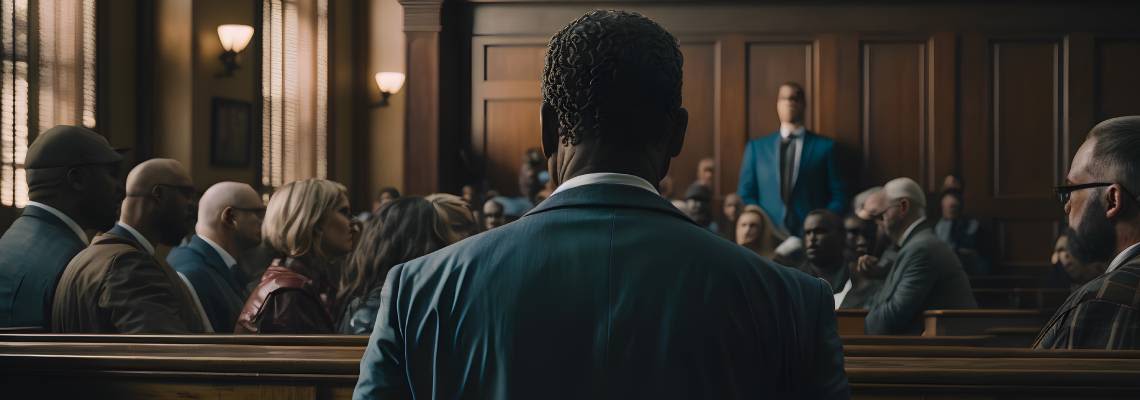
Grounds for Success in Criminal Appellate
A criminal conviction does not always mean the end of the road. When mistakes happen during a trial, individuals have the right to challenge the outcome through an appeal. Because the appeals process involves strict rules and high stakes, having a knowledgeable lawyer makes a massive difference.
Attempting to handle an appeal without legal help often leads to missed deadlines and lost opportunities. Working with an experienced attorney gives you the strongest defense possible when fighting an unfair conviction.
For those facing this situation, I offer strong, dependable legal support at the Law Offices of Ravert J. (Jay) Clark. With over 30 years of experience in both state and federal courts, I have seen almost every type of criminal case. I take the time to thoroughly explain your rights and walk you through your best options. I gladly serve clients in Cincinnati, Ohio, including Norwood, Blue Ash, Mason, West Chester, and Fairfield.
Understanding the Purpose of an Appeal
Many people mistakenly believe that an appeal is a second trial. This is not true. An appeal is a formal request to a higher court to review a lower court's decision in a criminal case.
The higher court looks for legal errors that may have changed the outcome of the original trial. They do not hear new testimony, examine new physical evidence, or hear from new witnesses. Instead, appellate judges read the written record from the trial court. They review the transcripts, the lawyers' motions, and the judge's rulings.
If the appellate court finds a significant error, it might reverse the conviction, modify the sentence, or order a brand-new trial. To win, an appellant must build their case on specific, recognized legal grounds.
Legal Errors During the Trial
The most common reason for a successful appeal is a legal mistake made by the trial judge. Judges have to make quick decisions about what evidence the jury can hear and what procedures the lawyers must follow. Sometimes, they get it wrong.
If a judge allows the prosecution to use illegally obtained evidence, this violates the defendant's constitutional rights. For example, if police search a home without a valid warrant, any items found during that search should not go before a jury. If the judge mistakenly allows that evidence in, the appellate court can rule this a reversible error.
Similarly, judges can make mistakes when keeping out good evidence. If the defense tries to present a witness who can prove the defendant's innocence, and the judge wrongly prevents that witness from testifying, the defendant does not get a fair trial. Highlighting these specific mistakes is a fundamental part of the appeals process.
Improper Jury Instructions
At the end of a trial, the judge reads a set of instructions to the jury. These instructions explain the laws that apply to the case. They tell the jury what the prosecution must prove beyond a reasonable doubt.
Jury instructions must be highly accurate. If the judge gives instructions that misstate the law, the jury might convict the defendant based on a misunderstanding of the law. For instance, if the case involves self-defense, the judge must explain the exact legal standard for self-defense in that state. If the judge omits a vital part of that legal standard, the jury cannot render a fair decision.
Appellate courts look very closely at how judges instruct juries. Finding a flaw in these instructions provides a strong basis for overturning a conviction.
Misconduct by the Prosecution
Prosecutors carry a heavy burden. They must seek justice, not just push for a conviction at any cost. Unfortunately, prosecutorial misconduct occurs, severely undermining the fairness of a trial.
Misconduct comes in many forms. A prosecutor might make highly inappropriate comments during closing arguments to inflame the jury's emotions. They might pressure a witness to lie on the stand. Perhaps the most severe form of misconduct happens when a prosecutor hides evidence.
Under the law, the prosecution must turn over any evidence that points to the defendant's innocence. This is known as the Brady rule. If the defense discovers after the trial that the prosecutor hid a police report or a witness statement that helped the defendant, they have clear grounds for an appeal. The appellate court takes hidden evidence very seriously.
Ineffective Assistance of Counsel
Everyone has the constitutional right to effective legal representation. Sometimes, the lawyer defending the accused makes massive mistakes that ruin the case. When this happens, the defendant can appeal on grounds of ineffective assistance from counsel.
Proving this is not easy. You cannot win an appeal just because your lawyer used a strategy you disliked, or because you lost the case. The mistakes must be so severe that they deprived you of a fair trial.
Examples of ineffective assistance include a lawyer falling asleep during the trial, failing to investigate an obvious alibi, or completely misunderstanding the law. If the appellate court agrees that the original lawyer failed to do their job, they will usually grant a new trial with a different attorney.
Ohio Laws on Criminal Appellate Review
If you face a conviction in Ohio, specific state rules dictate how and when you can appeal. The Ohio Rules of Appellate Procedure govern every step of this process. Timing is everything under these laws. In Ohio, a defendant generally has exactly 30 days from the date the trial court enters the final judgment to file a Notice of Appeal. Missing this 30-day window usually means losing the right to appeal entirely.
Appeals from Hamilton County trial courts go to the First District Court of Appeals in Ohio. The appellate process requires the submission of a detailed written document called an appellate brief. This brief outlines the precise legal errors that occurred during the trial, citing specific Ohio laws and prior court decisions. Sometimes appellate judges ask lawyers to present oral arguments. During oral arguments, the judges ask the lawyers questions about the brief and the laws applying to the case.
Ohio law also limits what the appellate court can do. The appellate judges will only overturn a conviction if the error actually prejudiced the defendant. If the court determines that an error occurred but was harmless and did not affect the trial's outcome, it will uphold the conviction.
Criminal Defense Attorney in Cincinnati, Ohio
Appealing a conviction demands a sharp eye for legal details. For over three decades, I have defended clients across state and federal courts. I apply deep courtroom knowledge to protect your rights during the appeals process. Also, I take the time to explain your rights clearly and walk you through your best options for a successful outcome. Serving Cincinnati, Ohio, and surrounding areas, including Norwood, Blue Ash, Mason, West Chester, and Fairfield, the Law Offices of Ravert J. (Jay) Clark stands ready to fight for you. Contact the firm today to discuss your case.